
A slide-out that stops halfway can turn a comfortable coach into a cramped, stressful place to be. RV slide repair is not just about getting a room to move again. It is about protecting the slide structure, keeping water outside, avoiding damage to flooring and cabinetry, and making sure you can travel safely when it is time to leave.
For RV owners parked at a Hill Country campground, staying on a ranch, or passing through Fredericksburg, Kerrville, Bandera, or Comfort, a failed slide can create an immediate problem. You may not be able to use the kitchen, access the bed, close the RV for travel, or keep rain from finding its way inside. The good news is that many slide problems give clear warning signs before a small issue becomes a major repair.
What Your Slide-Out Symptoms Can Mean
Slide-outs are mechanical systems, but they are also tied into your RV’s electrical system, battery condition, seals, framing, and interior alignment. That is why a slide that appears to have a simple motor problem may actually be reacting to weak voltage, a binding seal, a damaged gear, or an out-of-level coach.
A slide that does not move at all is often an electrical issue. A weak house battery, blown fuse, tripped breaker, failed switch, loose connection, or problem with the control module can all stop the system before the motor ever receives enough power. If the slide works when connected to shore power but not on battery power, that points toward battery health, charging, or a high-resistance connection.
A slide that starts moving but stalls, jerks, or moves unevenly needs more attention. It may have a worn gear pack, slipping clutch, damaged cable, bent track, failing motor, or a roller that is no longer supporting the room correctly. Continuing to run it can chew up gears, twist the room, scrape the floor, or damage the exterior wall opening.
Grinding, popping, or repeated clicking are not sounds to ignore. A single faint motor sound can occur during normal operation, but harsh noise usually means the mechanism is binding or a component is no longer engaging correctly. Stop operating the slide and have the cause identified before trying it again.
Water intrusion is another common call for RV slide repair. A leak may come from a torn bulb seal, poorly seated wiper seal, a slide that is not closing squarely, or water traveling from a roof or sidewall issue above the room. The visible drip is not always the original source. A technician may need to inspect the roofline, trim, seals, and the slide’s final position to find where water is entering.
Do Not Force a Stuck RV Slide
When a slide will not retract, the instinct is understandable: press the switch again, push on the room, or try to help it along. That can turn a manageable repair into a more expensive one. Slide-out mechanisms are designed to move a heavy room evenly. Manual force applied to one corner can put the room out of square and damage the floor, gears, rails, or cable system.
Before attempting any reset procedure listed in your owner’s manual, make sure the RV is as level as possible and that nothing is blocking the room inside or outside. Check for branches, rocks, stored gear, carpet bunching, loose trim, and objects caught near the seal. Then confirm that your batteries are charged and that the disconnect switch is in the correct position.
If the slide still will not move, stop there. Do not keep cycling the switch. Repeated attempts can overheat a motor or strip a gear that was only beginning to fail.
Some RVs have a manufacturer-approved manual override, but it varies by system. Schwintek, rack-and-pinion, cable-driven, hydraulic, and electric screw-drive slides each have different procedures and risks. Using the wrong method can cause further damage, so it is best to use the specific instructions for your coach or have a qualified RV technician assess it on-site.
The Most Common RV Slide Repair Needs
No two slide systems are exactly alike, but most service calls fall into a few familiar categories. Accurate diagnosis matters because replacing a motor will not solve a slide that is binding from poor alignment, and new seals will not fix a leak caused by an improperly seated room.
Electrical and control problems
Electrical repairs may involve batteries, converters, fuses, switches, wiring, relays, controllers, or motors. RV batteries can look fine at rest but lose voltage sharply when a slide motor demands heavy current. Corroded terminals and loose ground connections can create the same frustrating symptoms.
A technician should test voltage under load rather than guessing. This helps separate a battery or charging problem from a slide motor or control issue and keeps you from replacing parts that were not the real failure.
Mechanical binding and alignment
An uneven slide, visible gap around the room, worn rollers, or a room that drags across the floor may point to alignment or support trouble. This type of work needs a careful approach. The room must be supported correctly, its travel measured, and its position adjusted without creating pressure on the seals.
Dusty campgrounds, rough roads, and normal travel vibration can all contribute to loose hardware and accelerated wear. The Texas Hill Country’s uneven sites can also make leveling especially important. A coach that is severely out of level may place enough stress on a slide opening to make operation difficult.
Seal, trim, and water-damage repairs
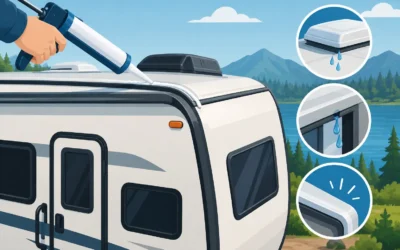
Slide seals should be soft, continuous, and positioned correctly when the room extends and retracts. Cracked seals, separated corners, loose trim, or gaps around the slide deserve prompt attention. Water can reach subflooring, wall framing, and insulation long before it becomes obvious inside.
If you notice a musty smell, soft floor near the slide, stained trim, or bubbling wall material, schedule an inspection soon. The repair may be limited to a seal and adjustment, but waiting can allow hidden moisture damage to spread.
Hydraulic system concerns
Some larger RVs use hydraulic slides. Low fluid, leaks, failed valves, damaged lines, or a weak pump can cause a slide to move slowly or not at all. Hydraulic fluid leaks should be addressed promptly, especially if fluid is visible around a compartment, under the coach, or near the slide mechanism.
Because hydraulic systems may serve leveling jacks as well as slide-outs, diagnosis should consider the entire system. A slide issue can sometimes be connected to a broader hydraulic problem.
Simple Care That Helps Prevent Slide Failures
Regular care will not prevent every failure, but it can reduce the chance of being stuck with a room extended when checkout time or bad weather arrives. Before extending the slide, level the RV and walk around the outside to make sure the path is clear. Inside, secure loose items and check that cabinet doors, chairs, rugs, and bedding are not interfering with travel.
Keep the slide roof and top edge clear of leaves, acorns, branches, and dirt. Debris can damage seals or get pulled into the coach when the room retracts. Inspect the wiper and bulb seals several times a year for tears, stiffness, separation, or signs that they are folding the wrong direction.
Use only the lubricant and conditioner recommended for your slide system and seals. More lubricant is not always better. The wrong product can attract grit, damage rubber, or cause buildup on tracks and moving components. It also helps to operate the slide periodically during storage, provided the RV has adequate battery power and the area is clear.
When you set up for a longer stay, pay attention to changes in operation. A slide that suddenly moves slower, makes a new noise, or leaves a different-sized gap is asking for service before it fails completely.
When Mobile RV Slide Repair Makes Sense
A slide that is stuck open can make it difficult or impossible to drive safely to a repair shop. Even when the room is closed, traveling with a binding or poorly aligned slide can make the damage worse. That is where an on-site technician can save time, towing expense, and a great deal of hassle.
Mobile RV Solutions can diagnose slide-out electrical, mechanical, seal, and alignment concerns where your RV is parked throughout the Texas Hill Country. On-site service is particularly useful for full-time residents, campground guests, and owners whose coaches are located on private property or remote acreage. A technician can evaluate the full setup, including battery power, leveling, room position, seals, and the slide mechanism, rather than asking you to gamble on a trip with a compromised coach.
Call for prompt service if the room is stuck out, moves crookedly, makes grinding noises, leaks during rain, or cannot be secured for travel. If you smell burning insulation, see smoke, notice a hydraulic leak, or have exposed wiring, stop using the system and treat it as urgent.
A slide-out should make your RV feel like home, not leave you wondering whether you can pack up or keep the weather out. A timely inspection and a clear repair plan can help you keep enjoying your stay, then leave the Hill Country when you are ready.
0 Comments