
A dead outlet can turn a comfortable campsite into a frustrating one fast. RV outlet failures may leave a coffee maker, phone charger, space heater, refrigerator, or medical device without power, but the outlet itself is not always the real problem. In an RV, one tripped safety device, loose campground connection, or converter issue can affect several circuits at once.
Before pulling covers or replacing parts, take a few safe, simple steps. If the problem involves heat, a burning smell, melted plastic, sparking, repeated breaker trips, or an outlet that feels warm, stop using that circuit immediately. Turn off shore power or the generator if needed and arrange professional service.
Start With the Power Source
When only one outlet stops working, it is tempting to assume the receptacle has failed. First, make sure the RV is receiving stable power. Check whether the air conditioner, microwave, lights, and other outlets are working normally. If several systems are down, the issue may be at the pedestal, shore cord, generator, main breaker, or converter rather than at one wall outlet.
At a campground, look at the power pedestal before doing anything inside the coach. A breaker at the pedestal can trip, especially during Texas Hill Country heat when multiple RVs are running air conditioners. Turn off large electrical loads in the RV, then reset the pedestal breaker firmly. If it trips again, do not keep resetting it. Repeated trips point to an overload, a damaged cord, moisture, or a fault that needs to be found.
If you are parked on private property or remote acreage, confirm that the outlet or service feeding the RV is sized correctly. A household 15- or 20-amp outlet is not designed to carry the same load as a 30- or 50-amp RV connection. Extension cords, adapters, and undersized wiring can overheat long before a breaker trips.
Check the GFCI Before Calling the Outlet Bad
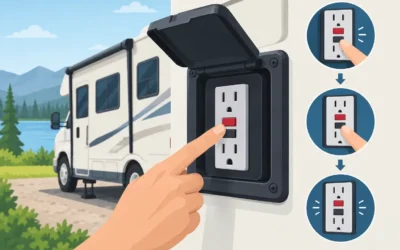
Many RV outlet failures come down to a tripped GFCI outlet. GFCI protection is designed to shut off power quickly when it detects an electrical imbalance that could create a shock hazard. One GFCI receptacle can protect several standard-looking outlets downstream, so the outlet that has stopped working may not have reset buttons of its own.
Look for GFCI outlets in the bathroom, kitchen, outside storage compartment, basement area, near the sink, or exterior entertainment area. Press the reset button firmly. If it will not reset, unplug devices from the affected outlets and try again. A plugged-in appliance, a damp exterior outlet, or a damaged cord may be causing the GFCI to trip.
Do not bypass a GFCI or replace it with a standard outlet just to restore power. That safety protection matters even more in an RV, where plumbing, weather, metal siding, and compact wiring runs are close together. If the GFCI trips repeatedly with everything unplugged, the circuit needs diagnosis rather than another reset.
Reset RV Breakers Correctly
A breaker can appear to be on when it has actually tripped to a middle position. At the RV electrical panel, first turn off and unplug items on the affected circuit. Then move the breaker fully to OFF before switching it back to ON. A partial reset may not restore power.
If the breaker immediately trips, leave it off. The cause could be a failed appliance, damaged outlet, loose wire, shorted circuit, or water intrusion. Breakers are doing their job when they trip. Forcing the issue can damage wiring or create a fire risk.
Separate an Outlet Problem From an Appliance Problem
A simple outlet tester can help confirm whether an outlet has power, but it does not replace a full diagnosis. You can also test a known working device, such as a small lamp or charger, in the suspect outlet. Then test the original appliance at a working outlet.
This process can reveal whether the problem follows the appliance or stays with the location. For example, if a portable heater trips every outlet it is plugged into, the heater may be the problem. If several appliances fail only on one circuit, attention shifts back to the RV wiring, breaker, GFCI, or receptacle.
Be careful with high-draw appliances. Space heaters, hair dryers, coffee makers, electric griddles, air fryers, and portable air conditioners can overload a 15- or 20-amp branch circuit quickly. Running two heat-producing appliances from the same circuit is a common reason breakers trip in older coaches and busy campgrounds.
Common Causes of RV Outlet Failures
RV electrical systems deal with vibration, weather, frequent connection changes, and periods of storage. That creates a few failure patterns technicians see regularly.
Loose connections are one of the most common. Road vibration can loosen a terminal behind an outlet, inside a junction box, or at the electrical panel. A loose connection creates resistance, and resistance creates heat. Sometimes an outlet works intermittently before it fails completely. Other times, owners notice discoloration, a hot faceplate, or a faint buzzing sound. Those are reasons to shut the circuit down, not to keep testing it.
Moisture is another frequent culprit. Exterior outlets, wet bays, slide-out areas, and outlets near plumbing are especially vulnerable after heavy rain, washing the RV, or a plumbing leak. Even when the outlet dries out, corrosion or a compromised GFCI may remain.
Worn receptacles can also cause trouble. If plugs fall out easily, sit loosely, or only work when positioned a certain way, the internal contacts may no longer hold securely. Replacing a worn RV outlet is usually straightforward for a qualified technician, but the wiring and circuit condition should be checked at the same time.
Rodents can create less obvious problems for RVs stored on ranches, seasonal sites, or remote property. Chewed wiring can cause intermittent outlet power, tripped breakers, and hidden safety hazards. A technician may need to trace the circuit rather than focus only on the outlet where the problem appeared.
When the Converter or Battery System Is Involved
Not every electrical complaint is an AC outlet failure. RVs operate with both 120-volt AC power and 12-volt DC power. Standard wall outlets generally need shore power, generator power, or an inverter to operate. Interior lights, water pumps, vent fans, control boards, and some refrigerator functions often rely on the 12-volt system.
If outlets are dead but 12-volt lights still work, start with the AC side of the RV. If lights are dim, batteries are weak, the water pump struggles, and other 12-volt equipment is acting up, the converter, batteries, battery connections, or charging source may be involved.
An inverter adds another layer. Some coaches have only a few outlets powered by an inverter, while others have more extensive inverter circuits. A tripped inverter breaker, low batteries, or an inverter fault can make selected outlets go dead even when the rest of the RV seems normal. The answer depends on how your coach is wired, which is why guessing can waste time and risk further damage.
Know When to Bring in an RV Technician
Basic checks are useful, but RV electrical troubleshooting should stop once there is a sign of damage or an unexplained recurring trip. Call for service if an outlet is hot, scorched, loose, wet, sparking, or making noise. The same applies if breakers or GFCIs will not reset, power cuts in and out while driving or using the slide-outs, or multiple outlets fail without a clear cause.
A mobile RV technician can test voltage at the pedestal, shore cord, transfer switch, breaker panel, GFCI, outlet, inverter, and related connections to isolate the fault. That matters because replacing the visible outlet without finding the upstream issue may only hide the problem for a short time.
For RV owners in Fredericksburg, Kerrville, Bandera, Comfort, Ingram, Center Point, and across the Texas Hill Country, Mobile RV Solutions can bring electrical diagnostics and repair to your campsite, driveway, ranch, or roadside location. You should not have to tow a coach to a shop just to find out why a receptacle quit working.
A working outlet is a small part of RV comfort, but the circuit behind it protects much more. Treat repeated electrical problems as a reason to pause, use another safe power source if available, and get the issue properly traced before your next night on the road.

0 Comments