
A Texas Hill Country afternoon can turn an RV from comfortable to miserable fast. If your RV air conditioner not cooling has you sitting in warm air while the unit runs overhead, the problem may be as simple as restricted airflow or as involved as a failing electrical or sealed-system component. The right next step depends on what the air conditioner is doing, what it sounds like, and whether it is getting dependable power.
Before you assume the rooftop unit has failed, work through a few safe checks. They can help you restore cooling in some cases and give a technician a clearer starting point if repair is needed.
Start With the Simple RV AC Checks
Set the thermostat to COOL and lower the temperature setting at least 5 degrees below the current indoor temperature. If the fan is set to AUTO, switch it temporarily to HIGH. This helps you tell the difference between a thermostat setting issue and an air conditioner that is running but not producing cold air.
Give the system a few minutes after changing settings. RV air conditioners do not cool an entire coach instantly, especially when the roof, windows, and interior have been baking in direct sun. Still, the air coming from the ceiling vents should begin to feel noticeably cooler than the air inside the RV.
Next, confirm that the RV has adequate power. A rooftop AC unit needs a strong 120-volt supply. When plugged into campground shore power, check that the pedestal breaker has not tripped and that the power cord is fully seated. If you are using a generator, make sure it is producing enough power for the AC and any other large loads running at the same time.
Low voltage is a common troublemaker in busy campgrounds during hot weather. The unit may hum, run weakly, or repeatedly trip a breaker. Avoid using the air conditioner on an undersized extension cord or a questionable adapter. That can damage the unit and create an electrical safety concern.
Check the Filter and Airflow
A dirty return-air filter can make an RV AC seem like it has lost its cooling power. Remove the interior ceiling cover as directed by the manufacturer and inspect the filter. Clean or replace it if it is loaded with dust, pet hair, or lint.
Then make sure the supply vents are open and not blocked by bedding, storage bins, or aftermarket vent covers. Weak airflow from every vent often points to a dirty filter, blower issue, frozen evaporator coil, or duct problem. Strong airflow that is simply warm points more toward a cooling or electrical issue.
Why Is My RV Air Conditioner Not Cooling?
The symptoms matter. A unit that blows room-temperature air is not necessarily dealing with the same problem as one that starts cold, then fades after an hour.
The Evaporator Coil May Be Frozen
When airflow across the evaporator coil is restricted, moisture can freeze on the coil. The unit may blow less and less air until it barely moves any at all. A dirty filter is one cause, but a weak blower motor, blocked intake, very humid conditions, or a refrigerant-related issue can also lead to icing.
Turn the cooling mode off and run the fan, if it will operate normally, to help thaw the coil. Do not chip at ice or push objects into the unit. Once thawed, clean the filter and try again. If the coil freezes repeatedly, the system needs diagnosis rather than another restart.
The Capacitor, Fan Motor, or Compressor May Be Failing
A rooftop AC has several hard-working electrical and mechanical parts. Capacitors help the fan motor and compressor start. When a capacitor weakens, you may hear humming, clicking, or a brief attempt to start followed by a shutdown. The fan may run while the compressor does not, leaving you with airflow but no real cooling.
A failing fan motor can create a similar result. If the outdoor fan is not moving enough air across the condenser, the unit can overheat and cycle off. These are not ideal do-it-yourself repairs on a roof in summer heat. Capacitors can hold a dangerous charge, even after power is disconnected.
Power, Breakers, and Control Problems Can Look Like an AC Failure
An RV air conditioner depends on more than the rooftop unit. A tripped breaker, weak shore-power connection, failing outlet, damaged power cord, converter-related electrical issue, thermostat fault, or control board problem can all interrupt cooling.
If the breaker trips every time the AC starts, leave it off instead of repeatedly resetting it. Repeated trips can indicate a short, a locked compressor, a failing capacitor, or a power supply problem. A technician can test voltage under load and trace the fault without guesswork.
Dirt on the Roof Unit Can Reduce Performance
The rooftop condenser needs clear airflow to release heat. Dust, leaves, cottonwood, insect nests, and road debris can collect beneath the exterior shroud. In the Hill Country, an RV parked under live oaks or near dry, dusty roads can build up debris faster than expected.
A careful visual inspection from a stable ladder may reveal obvious blockage, but do not climb onto a roof that is wet, soft, damaged, or not designed for foot traffic. The shroud and internal components are easier to damage than they look. Professional cleaning is often worth it when the unit has been neglected or access is unsafe.
A Safe Troubleshooting Order
If your RV air conditioner is not cooling, use this order to avoid wasting time and putting extra strain on the system:
- Verify thermostat settings and give the unit several minutes to respond.
- Confirm shore power or generator power, then check the AC breaker once.
- Inspect and clean the interior air filter and open all supply vents.
- Look for weak airflow, unusual noises, ice, water dripping inside, or repeated breaker trips.
- Turn the unit off if you smell burning, hear loud metal-on-metal noise, or see electrical damage.
Write down what you find. For example, note whether the fan runs, whether the compressor sound starts, how long the unit cools before quitting, and whether the problem happens only on generator power or campground power. Those details can shorten the diagnostic visit.
When to Call for Mobile RV AC Repair
Call for help promptly if the AC is blowing warm air after basic checks, freezing over more than once, tripping breakers, leaking inside the RV, making loud noises, or showing signs of burning or overheating. The same applies if your coach is occupied by pets, young children, older adults, or anyone who cannot safely wait through high indoor temperatures.
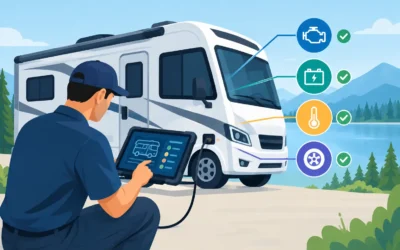
For RV owners parked at a campground, ranch, river property, or roadside location, taking the coach to a shop is often the hardest part of the repair. A mobile technician can test the power source, thermostat, capacitors, fan motor, compressor operation, wiring, and airflow where the RV is already parked. That helps separate a repairable component issue from a unit that is nearing replacement.
Replacement is not always the automatic answer. A failed capacitor, damaged wiring connection, thermostat issue, or blower problem can often be repaired for less than a new rooftop air conditioner. On the other hand, an older unit with repeated compressor trouble, corrosion, major damage, or unavailable parts may be better replaced. The practical choice depends on the unit’s age, condition, repair cost, and how reliably you need the RV to perform.
Keep Cooling Problems From Ruining the Next Trip
The best time to service an RV AC is before the first serious heat wave. Clean or replace filters regularly, keep the roof area clear of debris, inspect the exterior shroud for cracks, and run the air conditioner before a long trip or a seasonal stay. If you use a generator, test it under AC load before heading to a remote site.
Inside the coach, close blinds on the sunny side, seal obvious gaps around windows and doors, and avoid adding heat from the oven during the hottest part of the day. Those small habits reduce the workload on a rooftop unit that is already working hard in Texas summer conditions.
When cool air stops at the wrong time, do not spend the day guessing from a hot RV. Mobile RV Solutions can diagnose the system at your location across the Texas Hill Country and help you make a clear, practical decision about repair. A quick call and a few symptom details can be the first step toward a cooler night and a trip that stays on track.

0 Comments