
A quiet evening at a Hill Country campground can turn stressful fast when the RV lights dim, the water pump slows down, or the battery will not hold a charge. An RV converter replacement service addresses the 12-volt power system behind many of those everyday comforts, often without requiring you to tow a disabled RV across town.
The converter may be tucked away out of sight, but it does an essential job whenever your RV is connected to shore power or running on a generator. When it fails, a rig can still appear to have 120-volt power at some outlets while the battery bank quietly drains. Knowing what the converter does, what failure looks like, and when replacement makes more sense than repair can help you act before a minor electrical issue becomes a stranded weekend or an uncomfortable night.
What an RV Converter Actually Does
An RV converter changes 120-volt AC power from a campground pedestal, generator, or home hookup into 12-volt DC power. That 12-volt power runs many of the systems RV owners use every day: interior lights, vent fans, water pumps, furnace controls, refrigerator control boards, slide-out controls, LP gas detectors, and more. It also charges and maintains the house batteries.
A converter is not the same thing as an inverter. An inverter takes battery power and changes it into household-style AC power for selected outlets or appliances. A converter works in the other direction. Some modern RVs use inverter-chargers that combine several functions, but many travel trailers, fifth wheels, and motorhomes still rely on a separate converter and distribution panel.
That distinction matters during diagnosis. A dead outlet, a tripped breaker, a bad battery, corroded cable, or a failed converter can all create similar symptoms. Replacing the wrong part wastes money and may leave the original problem in place.
Signs You May Need RV Converter Replacement Service
The most common sign is a battery that goes flat even while the RV is plugged into reliable shore power. You may notice lights becoming weak overnight, the furnace failing to start on a cool Fredericksburg evening, or the water pump cycling sluggishly. A healthy converter should generally supply DC power and keep the batteries charging when AC power is available.
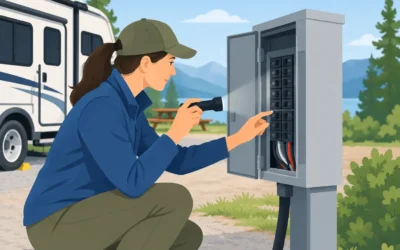
Other warning signs include a converter cooling fan that runs constantly, does not run when the unit is working hard, or makes an unusual grinding sound. You may smell hot plastic near the electrical panel, see discoloration around wiring or fuses, or hear a persistent buzzing sound. Heat and odor around electrical components deserve prompt attention. Shut off power if conditions appear unsafe and avoid repeatedly resetting breakers or replacing blown fuses without finding the cause.
Voltage readings can also tell a story. A resting battery may read around 12.6 volts when fully charged, while an operating converter commonly raises charging voltage above that level. Exact readings vary with battery type, temperature, charging stage, and equipment design, so one number alone does not settle the diagnosis. A technician checks voltage at the battery, converter output, fuse panel, and relevant connections to determine where power is being lost.
Why a Proper Diagnosis Comes Before Replacement
A converter can fail from age, heat, vibration, moisture, or an electrical event, but it can also be damaged by a problem elsewhere in the RV. A weak or shorted battery may force a converter to work too hard. Loose battery terminals, undersized aftermarket wiring, corroded grounds, or incorrectly connected solar equipment can interfere with charging. A campground power surge or generator problem may be part of the picture as well.
For that reason, a good service call starts with the entire charging path rather than a guess based on one symptom. The technician verifies incoming AC power, inspects breakers and fuses, tests converter output, evaluates battery condition, and checks the major cable connections. If the converter truly has failed, the replacement should be sized and configured for the RV’s electrical system and battery bank.
This step is particularly valuable for full-time residents and owners parked on private ranches or remote acreage. If the RV is your home for the week, a replacement that works only briefly is not a solution. The goal is dependable charging, protected wiring, and confidence that the water pump, furnace, lights, and safety equipment will keep operating as expected.
Choosing the Right Replacement Converter
Not every replacement converter is interchangeable. The correct choice depends on the existing distribution panel, required amperage, battery chemistry, wire capacity, and how the RV is used. A weekend camper with a single lead-acid battery has different needs than a fifth wheel with multiple lithium batteries, solar charging, and extended off-grid use.
Output Capacity and Fit Matter
Converters are commonly rated by amperage. Installing a larger unit is not automatically better if the panel, wiring, fusing, and battery setup are not designed for it. Physical fit is important too. Some converters are replacement modules built for a particular power center, while others are stand-alone units mounted nearby.
A technician can identify whether an exact replacement is the practical route or whether an updated unit provides worthwhile benefits. In many cases, the best answer is a quality replacement that fits the existing system cleanly and restores reliable charging without unnecessary modifications.
Battery Type Changes the Recommendation
Charging profiles matter. Flooded lead-acid, AGM, gel, and lithium batteries have different charging requirements. A converter that is acceptable for one battery type may undercharge, overcharge, or shorten the life of another. If you have upgraded batteries or plan to do so, say so before a replacement is selected.
Modern multi-stage converters can improve battery maintenance by adjusting charging voltage through bulk, absorption, and float stages. That can be especially helpful for RVs left plugged in for long periods. Still, equipment selection should match your actual electrical setup, not just the newest feature list.
What On-Site Converter Replacement Looks Like
A mobile repair visit can save a great deal of trouble when your RV will not safely travel or when moving it means breaking camp, arranging a tow, and losing time. Mobile RV Solutions serves RV owners throughout the Texas Hill Country, bringing diagnostic equipment and service tools to campgrounds, private properties, roadsides, and remote locations when conditions allow.
After confirming the fault, the technician disconnects power safely, removes the failed converter or module, and inspects surrounding wiring, fuses, terminals, and battery connections. The replacement is installed, secured, and tested under normal operating conditions. That final test matters. It confirms that the batteries are receiving the correct charge and that the RV’s 12-volt systems are operating properly.
Parts availability can affect same-day completion. Common converter models or compatible replacements may be available quickly, while older panels, specialty battery systems, or damage involving wiring can require additional sourcing or repair time. Clear communication about the findings, part options, and expected next step is far better than promising a quick fix before the electrical system has been evaluated.
Avoid These Common Converter Mistakes
Do not assume the converter is bad just because the batteries are dead. A battery near the end of its life may not accept or retain a charge, even with a healthy converter. Conversely, do not install a new battery without checking the charging system. A failed converter can quickly leave the new battery in the same discharged condition.
Avoid bypassing fuses, using larger fuses to stop repeated blowing, or adding temporary wiring patches. Fuses are there to protect wiring from overheating. Repeated fuse failures usually point to a short circuit, overloaded circuit, or component fault that needs to be located.
It is also wise not to ignore heat, burning smells, melted plastic, or battery swelling. Disconnect shore power and battery power if it is safe to do so, keep the area ventilated, and arrange professional help. Electrical problems can affect more than convenience. They can threaten battery health, critical safety devices, and the RV itself.
Keep the New Converter Working Longer
Once charging is restored, a few routine checks can reduce the odds of another surprise. Keep battery terminals clean and tight, inspect cables for corrosion or damaged insulation, and make sure the converter area has adequate airflow. If your RV has flooded batteries, follow the manufacturer’s guidance on water levels and maintenance.
Before long trips, check battery condition and confirm that the RV charges normally on shore power. After a major storm, power fluctuation, or generator issue, pay attention to charging behavior instead of waiting for the next overnight stay. Surge protection and proper campground power checks can also help protect sensitive electrical equipment, though no device can prevent every failure.
When the lights are fading and the batteries are not charging, getting a clear diagnosis early can protect your trip, your comfort, and your electrical system. A capable on-site technician can help you make the next decision with confidence, whether that means a simple connection repair, battery service, or a properly matched converter replacement.

0 Comments