
A refrigerator that quits overnight, an air conditioner that blows warm air, or a slide-out that will not move can change a good Hill Country trip fast. Effective RV diagnostics do more than identify the part that stopped working. They uncover why the failure happened, what else may be affected, and the safest path to a lasting repair.
That matters whether your RV is parked at a Fredericksburg campground, set up on private acreage near Kerrville, or stopped along the road outside Bandera. RV systems are closely connected. A weak battery can look like an appliance problem. A tripped breaker may be a symptom of a damaged component. A water leak can start as a small plumbing issue and turn into floor, wall, or electrical damage if it is left alone.
What RV Diagnostics Should Actually Do
A proper diagnostic visit starts with listening to what changed. Did the problem begin after a storm, a long drive, a battery replacement, or connecting to a new campground power pedestal? Does it happen only on shore power, only on propane, or only after the RV has been running for a while? Those details often narrow the search before a technician opens a panel.
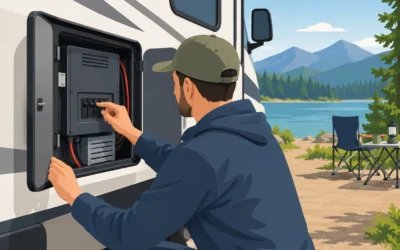
From there, the goal is to test the system rather than guess at the replacement part. A technician may check voltage at the source and at the appliance, inspect fuses and breakers, test battery condition, verify propane delivery, look for water intrusion, or run the equipment through its normal operating cycle. The exact process depends on the system and the symptoms.
This approach can save time and money. Replacing a failed converter without finding the wiring issue that damaged it may leave you with the same problem again. Resetting a breaker without checking why it tripped can create a safety risk. Good diagnostics identify the immediate failure and help prevent a repeat breakdown.
The Most Common RV Problems That Need Diagnosis
Some failures are obvious, such as a burst pipe or a tire-damaged exterior panel. Others are less clear. These are the issues that most often benefit from hands-on testing.
Electrical and battery trouble
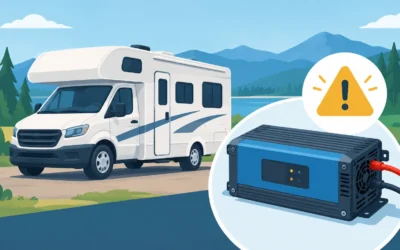
Electrical concerns can show up as dim lights, dead outlets, intermittent appliances, batteries that will not stay charged, or a generator that starts but does not power the coach. The source could be the battery bank, converter, inverter, shore-power connection, transfer switch, fuse, breaker, wiring, or the appliance itself.
Voltage readings alone do not always tell the full story. A battery may show acceptable voltage with no load and then drop sharply when the furnace, water pump, or slide-out motor demands power. Likewise, campground power problems can resemble an RV electrical failure. Testing at several points helps separate an external supply issue from a problem inside the coach.
Air conditioning, furnace, and refrigerator failures
Comfort systems matter quickly in the Texas Hill Country. When temperatures climb, an air conditioner that runs but does not cool is not a minor inconvenience. The cause may involve the thermostat, control board, capacitor, fan motor, power supply, airflow restriction, or a rooftop unit problem. Each has a different repair path.
Furnaces and RV refrigerators also require careful diagnosis because they rely on multiple systems. A furnace may need 12-volt power, a working thermostat, proper airflow, and propane ignition in the right sequence. An RV refrigerator may operate differently on shore power, battery power, or LP gas. Knowing which mode fails gives useful clues, but the technician still needs to verify the underlying cause.
Plumbing leaks and water heater concerns
A slow drip under a sink, near the water pump, or beneath the RV can become expensive if it reaches flooring or enclosed areas. Diagnostics may include checking fittings, valves, the pump, the city-water connection, the fresh-water tank, and drain lines. The problem is not always where the water appears. Water can travel along framing or underbelly materials before it becomes visible.
Water heater issues can involve electrical heating elements, gas ignition, control boards, bypass valves, pressure relief components, or water flow. If you smell gas, see active leaking around a water heater, or suspect a propane issue, stop using the affected system and seek qualified help right away.
Slide-outs, leveling, and other mechanical problems
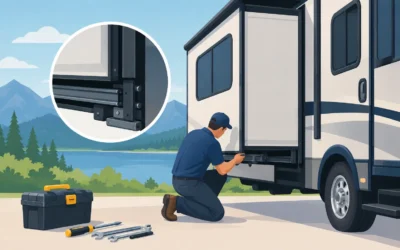
A slide-out that stops midway can result from low battery voltage, a blown fuse, a failed switch, wiring damage, a motor problem, or a binding mechanical component. Forcing it can make the repair larger. The same goes for leveling systems and entry steps. A technician needs to determine whether the issue is electrical, hydraulic, mechanical, or a combination before attempting a correction.
Roof and water intrusion damage
Roof damage is not always visible from the ground. Cracked sealant, damaged vent surrounds, loose trim, and storm-related impacts can allow water into the RV long before a ceiling stain appears. A diagnostic inspection looks at likely entry points and signs of moisture damage around roof penetrations, windows, exterior seams, and interior surfaces.
When to Stop Troubleshooting and Call for Help
RV owners can safely handle a few basic checks: confirm that the campground pedestal has power, make sure a breaker has not simply tripped, verify that a propane cylinder is open, and check whether batteries are connected correctly. Beyond those basics, repeated resets and trial-and-error part swaps can make diagnosis harder.
Call for service promptly when you notice burning smells, hot electrical panels, sparking, persistent breaker trips, a propane odor, active water leaks, smoke, visible roof damage, or a slide-out that will not retract before travel. These are not situations to wait out.
It also makes sense to call when a problem is intermittent. An appliance that works sometimes is not necessarily fixed. Intermittent faults are often caused by loose connections, worn components, moisture, weak batteries, or heat-related failures. Catching them early can prevent a no-start situation or a complete system shutdown later.
How Mobile RV Diagnostics Save Time
Taking a disabled RV to a repair facility is not always simple. You may be unable to move it safely, have a slide-out stuck open, or be living in it full-time with food, pets, and personal belongings onboard. Towing a large RV can add cost, delay, and another layer of stress.
Mobile service brings diagnostic equipment and repair experience to your location. At a campsite, ranch, driveway, roadside location, or storage site, a technician can assess the problem where it occurred and test the RV under real conditions. That is especially useful when the issue involves campground shore power, a generator, a specific weather condition, or equipment that only fails while the coach is set up.
Mobile RV Solutions serves owners across the Texas Hill Country with on-site testing and repair for the systems that keep an RV safe and livable. When a repair requires a special-order part or a more extensive shop-level repair, a clear diagnosis still gives you the information needed to make a practical decision instead of moving forward on assumptions.
What to Have Ready for an RV Diagnostic Visit
A little preparation helps the visit go faster. Have the RV make, model, and year available, along with the appliance brand and model if you can find it. Be ready to describe when the issue started, what power source or fuel source was in use, any warning lights or error codes, and what you have already tried.
Do not worry if you do not know every technical detail. A clear description such as “the refrigerator works on propane but not shore power” or “the lights dim when the water pump starts” is useful. Photos of an error display, a leak, or a damaged roof area can also help when discussing the problem by phone.
The best time to schedule RV diagnostics is before a small warning becomes a trip-ending failure. If something in your coach is acting differently, getting a clear answer now can protect your comfort, your travel plans, and the RV you depend on.
0 Comments