
A cold night at a Hill Country campground can turn stressful fast when your RV furnace won’t ignite. You set the thermostat, hear a click or the blower starts, but no warm air follows. Before assuming the furnace has failed, take a careful look at the few systems that must work together: 12-volt power, propane supply, airflow, and the furnace’s built-in safety controls.
Some checks are simple and appropriate for an RV owner. Others involve propane, wiring, or combustion components and are better left to a qualified RV technician. The goal is to restore heat safely, not just get the furnace to run for a few minutes.
Start by Noticing What the Furnace Does
The sound and timing of the failure provide useful clues. RV furnaces follow a sequence: the thermostat calls for heat, the blower motor starts, airflow closes a safety switch, the igniter sparks, the gas valve opens, and the burner lights. If the furnace senses a problem at any point, it shuts down or refuses to light.
If nothing happens at all when you raise the thermostat, the issue is often thermostat settings, 12-volt power, a fuse, or a loose connection. If the blower runs but you never hear ignition, propane flow, the igniter, or an airflow safety switch may be involved. If it lights briefly and then shuts down, a dirty burner, weak flame signal, restricted exhaust, or control-board issue becomes more likely.
Do not keep cycling the thermostat repeatedly. Most furnaces will attempt ignition a limited number of times before locking out, and repeated attempts can drain the battery while leaving you no closer to the real cause.
Check the Easy Causes First
Confirm the Thermostat and 12-Volt Power
An RV furnace needs 12-volt DC power even when you are plugged into shore power. The converter must be charging the battery properly, or the battery must have enough charge to operate the blower and control board. A battery can be strong enough to run lights but too weak to provide the steady voltage a furnace needs during startup.
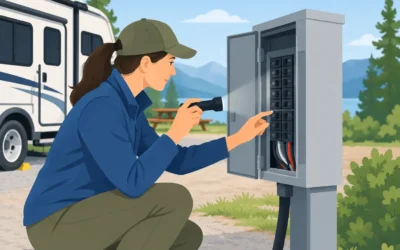
Set the thermostat to heat and raise the setting several degrees above the current interior temperature. Make sure the furnace switch is on, if your RV has a separate switch, and check the furnace fuse in the DC distribution panel. A blown fuse is sometimes the symptom of another electrical problem, so replacing it once is reasonable. If it blows again, stop and have the circuit diagnosed.
Look for low-battery signs elsewhere in the coach, including dim lights, slow vent fans, or a water pump that sounds strained. If you are dry camping on a ranch, at a river site, or in a remote campground, battery condition is especially worth checking before pursuing more complicated furnace repairs.
Verify That Propane Is Available
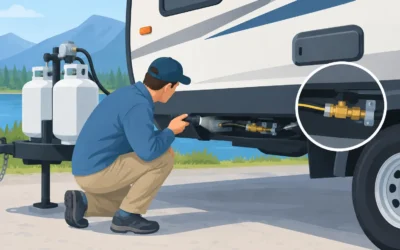
A full-looking propane gauge does not always mean propane is reaching the furnace. First, confirm that the LP valve at the tank is open. Then try another propane appliance, such as the cooktop. If the cooktop will not light, the problem may be an empty tank, closed valve, failed regulator, or an issue in the RV’s LP system rather than the furnace itself.
If the RV has been sitting or a propane cylinder was recently changed, there may be air in the line. Light a cooktop burner and let it run briefly to establish gas flow, then try the furnace again. Do not use an open flame to test for leaks. If you smell propane, hear hissing near a fitting, or suspect a leak, turn off the propane supply, avoid electrical switches and flames, leave the area, and arrange for professional help.
Cold weather can also expose a weak regulator or low propane pressure. That does not mean you should adjust a regulator yourself. Propane-system adjustments and leak testing require the right equipment and training.
When the Blower Runs but the RV Furnace Won’t Ignite
This is one of the most common furnace complaints. The blower can run even when the furnace cannot safely proceed to ignition.
Airflow and the Sail Switch
Before the furnace opens the gas valve, it must prove that the blower is moving enough air. A small internal component called a sail switch responds to airflow. If dust, pet hair, debris, a weak blower motor, or a blocked return-air opening prevents adequate airflow, the sail switch may not close. The furnace will run the blower but will not spark or release propane.
Check that supply registers are open and that rugs, storage bins, bedding, or pet items are not blocking return-air vents. Outside, inspect the furnace exhaust and intake area for mud-dauber nests, leaves, insect screens clogged with debris, or other obstructions. Never run the furnace with a damaged or blocked exterior vent.
The sail switch itself is inside the furnace housing. Reaching it can require removing panels and working around electrical and gas components, so this is normally a service call rather than a roadside DIY repair.
Igniter, Burner, and Gas Valve Problems
If you hear the blower, followed by clicking, but the burner never lights, the furnace may not be receiving propane or may not be producing a strong spark. A dirty igniter, cracked electrode, corroded connection, obstructed burner tube, failing gas valve, or faulty control board can all interrupt ignition.
You may hear a few clicks followed by the blower continuing for a short period before shutdown. That pattern often means the board attempted ignition but did not detect a flame. The exact cause cannot be confirmed by sound alone. A technician will inspect the burner assembly, verify propane pressure, test the igniter and wiring, and check whether the board is sending the correct signals.
Avoid removing the burner or trying to clean it with improvised tools. A burner that is reinstalled incorrectly can create unsafe combustion or carbon monoxide concerns.
When the Furnace Lights, Then Goes Out
A furnace that ignites briefly but does not stay lit is behaving differently from one that never starts. It may be sensing an unstable flame, overheating, or losing the safety signal required to keep the gas valve open.
Restricted ducts, blocked registers, a dirty blower wheel, or a failing high-limit switch can cause overheating. The limit switch shuts the burner down to protect the furnace, though the blower may continue to run while the unit cools. A dirty burner or poor flame quality can also cause the flame to drop out shortly after ignition.
This is not a situation to solve by bypassing a switch. Safety switches are there to prevent overheating, fire, and combustion hazards. If the furnace is cycling on and off or producing unusual smells, shut it down until it can be inspected.
A Safe Owner Checklist Before Calling for Service
A few observations can help speed up a repair visit. Before calling, note whether the furnace does nothing, runs the blower only, clicks without lighting, or lights and shuts down. Check your battery voltage if you have a meter, confirm other propane appliances work, and look for blocked furnace vents or return-air openings.
Also let the technician know the furnace make and model if available, whether the RV is on shore power or battery power, and whether the issue began after storage, a propane refill, a heavy rain, or unusually cold weather. These details can narrow the diagnosis before anyone opens the furnace compartment.
Do not bypass fuses, jumper safety switches, operate the furnace with the exterior cover removed, or continue using it if you smell propane or exhaust fumes. Make sure your RV’s carbon monoxide and LP gas detectors have fresh batteries and are working properly. Those alarms are a critical line of protection in any RV, especially when everyone is asleep.
When On-Site Furnace Repair Makes Sense
In the Texas Hill Country, a furnace failure can be more than an inconvenience, particularly for full-time RV residents, travelers with children, or anyone parked far from a repair shop. Towing an RV over a no-heat issue is rarely the easiest answer when a capable technician can diagnose the electrical, LP, airflow, and furnace-control systems where the RV is parked.
Mobile RV Solutions provides on-site RV furnace diagnostics and repair throughout the area, including campgrounds, private properties, and remote acreage. A proper visit focuses on finding the failed component and confirming that the furnace cycles safely afterward, rather than replacing parts based on a guess.
If heat is needed before repairs can be made, use only approved portable heating equipment according to its instructions, keep clear space around it, and never use an oven, cooktop, or outdoor heater to warm the RV. A calm, methodical check now can protect your comfort tonight and help keep your next trip on schedule.
0 Comments