
A hot Texas Hill Country afternoon can turn an electrical problem into an urgent comfort problem fast. If the air conditioner quits, outlets go dead, or the refrigerator changes over unexpectedly, RV shore power troubleshooting can help identify whether the issue is at the campground pedestal, your power cord, the RV breaker panel, or a connected appliance.
Start safely. Shore power can involve 30-amp or 50-amp service, and both can cause serious injury or equipment damage when handled carelessly. If you smell burning insulation, see melted plastic, hear crackling, or find a cord or receptacle that is hot to the touch, disconnect power if you can do so safely and call for professional service. Do not keep resetting breakers or force a plug into a damaged outlet.
Start RV Shore Power Troubleshooting at the Source
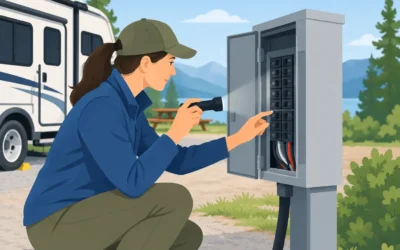
Before opening an RV panel or assuming the converter has failed, check the pedestal where the RV is plugged in. Campground power equipment sees a lot of use, especially during busy weekends and high-demand summer weather. A problem at the pedestal can look exactly like an RV electrical failure.
Confirm that the pedestal breaker is fully switched on. A breaker can appear on while sitting in a halfway-tripped position. Turn it firmly off, then back on once. If it immediately trips again, leave it off. That may point to a fault in the RV, the cord, or the pedestal itself.
Next, make sure your cord is completely seated and the locking ring, if equipped, is snug. A partially inserted plug can create resistance, heat, and intermittent power. Look closely for darkened blades, melted areas, cracked plastic, loose terminals, or corrosion around the plug. Texas humidity, rain, dust, and years of campground use can all contribute to poor connections.
If the campground allows it and you have a quality electrical management system or surge protector, check its display or indicator lights. It may show low voltage, an open neutral, reversed polarity, or another supply issue. Low voltage deserves attention even when some RV equipment still works. Air conditioners and compressors can be damaged when they are forced to run on inadequate voltage.
A basic outlet tester is useful for some 120-volt receptacles inside the RV, but it does not replace a proper pedestal tester or multimeter. Unless you are comfortable working around live electrical equipment, this is the point where calling a mobile RV technician is the safer choice.
Check the Cord and RV Power Connection
Your shore power cord carries all incoming AC power to the coach, so it should be inspected every time a power problem appears. With the pedestal breaker off and the cord unplugged, feel along the cord for cuts, crushed sections, stiff spots, or areas that look overheated. Pay extra attention to both ends, where internal wires can loosen from repeated bending.
Adapters deserve the same scrutiny. A 50-amp-to-30-amp dogbone adapter or a 30-amp-to-15-amp adapter can be handy, but it also adds another connection that can loosen or overheat. Light-duty household extension cords are not a good substitute for a properly rated RV power cord. They can create voltage drop, especially when an air conditioner, microwave, water heater, or space heater is running.
If your RV has a detachable power inlet, inspect the inlet on the RV side. A loose inlet, heat damage, or corroded contacts can interrupt one leg of power or cause an intermittent connection when the cord moves. On a 50-amp RV, losing one leg may leave some outlets and appliances working while others are dead. That can make the problem confusing, but it is a valuable clue for diagnosis.
Look at the Main Breaker and GFCI Outlets
Once you have confirmed the pedestal and cord appear sound, go to the RV’s electrical distribution panel. Find the main AC breaker and check whether it has tripped. Reset it once by moving it fully off, then back on. If it trips immediately, do not continue resetting it. Repeated trips usually mean there is a short circuit, an overloaded circuit, a failed appliance, or a wiring issue that needs to be located.
Then check the individual branch breakers. The breaker labeled air conditioner, microwave, water heater, refrigerator, or general outlets may be tripped even when the main breaker remains on. Turn off or unplug high-draw appliances before resetting a branch breaker. This reduces the chance of a heavy load causing another immediate trip.
Do not overlook GFCI outlets. Many RVs use one GFCI receptacle to protect several outlets, often in the kitchen, bathroom, exterior compartment, or storage bay. If your bathroom outlet, outside outlet, and a nearby kitchen outlet all quit at once, press the reset button on every GFCI outlet you can find. Moisture in an exterior outlet, a faulty appliance, or a damaged extension cord can trip the circuit.
If a GFCI will not reset, disconnect anything plugged into the protected outlets and try again. If it still will not reset, there may be a fault downstream. Leave the circuit off rather than bypassing or replacing the GFCI with a standard outlet.
Separate Shore Power Problems From Battery Problems
A common source of confusion is that RVs use two electrical systems. Shore power supplies 120-volt AC power for outlets and many appliances. The battery system supplies 12-volt DC power for lights, fans, control boards, slide controls, water pumps, and other equipment. The converter uses shore power to recharge batteries and supply much of the 12-volt demand while plugged in.
That means a dead ceiling light does not always mean shore power is out. It may be a low battery, a blown 12-volt fuse, a battery disconnect switch, or a converter problem. Likewise, working interior lights do not prove that shore power is reaching the RV.
A useful clue is the battery voltage. When an RV is connected to healthy shore power and the converter is charging, battery voltage is typically higher than a resting battery voltage. Exact readings depend on the battery type and charging stage, but a battery that continues to drop while plugged in may indicate the converter is not receiving AC power or is not working correctly.
Check the converter’s AC breaker and the 12-volt fuse panel. Some converters have reverse-polarity fuses that can blow after incorrect battery connections. Replacing a fuse without correcting the cause can lead to another failure, so a technician should inspect the system if the new fuse blows again.
Watch for Load-Related Failures
Sometimes shore power works until a major appliance starts. The air conditioner may run for a few minutes and trip the breaker, or the microwave may dim lights and cause a power monitor to report low voltage. These symptoms can come from too much demand on a 30-amp connection, low campground voltage, a weak breaker, or an appliance with a developing electrical problem.
On 30-amp service, power management matters. Running an air conditioner, electric water heater, microwave, coffee maker, and portable heater together can exceed available capacity. Switch the water heater and refrigerator to LP gas when appropriate, wait to use the microwave until the air conditioner cycles off, and avoid portable heaters unless you know the circuit can handle them.
A 50-amp RV has more available capacity, but it is not immune to trouble. One failed hot leg can reduce usable power significantly, while an open neutral can create dangerous voltage irregularities. These are not conditions to troubleshoot by trial and error. Disconnect and get the supply and RV checked.
When to Stop and Call for Mobile RV Electrical Repair
Some checks are sensible for an RV owner. Electrical repairs inside a panel, transfer switch, power inlet, converter, or pedestal are different. Call for help if you find heat damage, repeated breaker trips, no power after confirming the pedestal works, partial power in a 50-amp coach, burning odors, flickering lights, or batteries that will not charge on shore power.
A qualified mobile technician can test voltage at the pedestal, cord, inlet, transfer switch, breaker panel, and converter to pinpoint the failure instead of replacing parts based on a guess. That matters when you are parked at a campground near Fredericksburg, staying on private acreage outside Kerrville, or trying to keep your RV livable during a hot spell in Bandera or Comfort.
Mobile RV Solutions can bring that diagnostic work to your location, helping you avoid the hassle of moving an RV that may not be safe or comfortable to travel in. A clear diagnosis protects your appliances, batteries, and travel plans while getting your shore power system back to doing its job: keeping the coach comfortable and ready for the road.
0 Comments